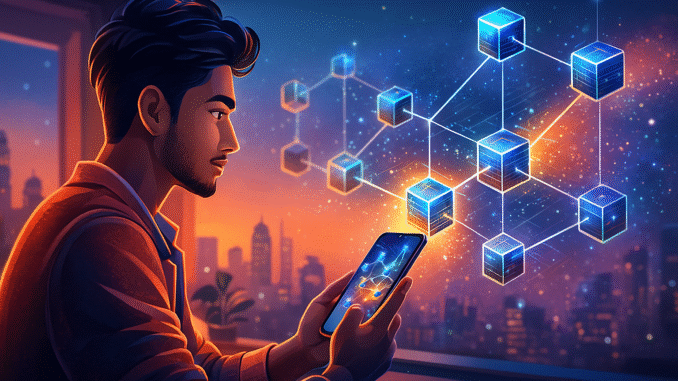
If you’re wondering what is blockchain India and why everyone is suddenly talking about it, the real answer is simpler than it seems.
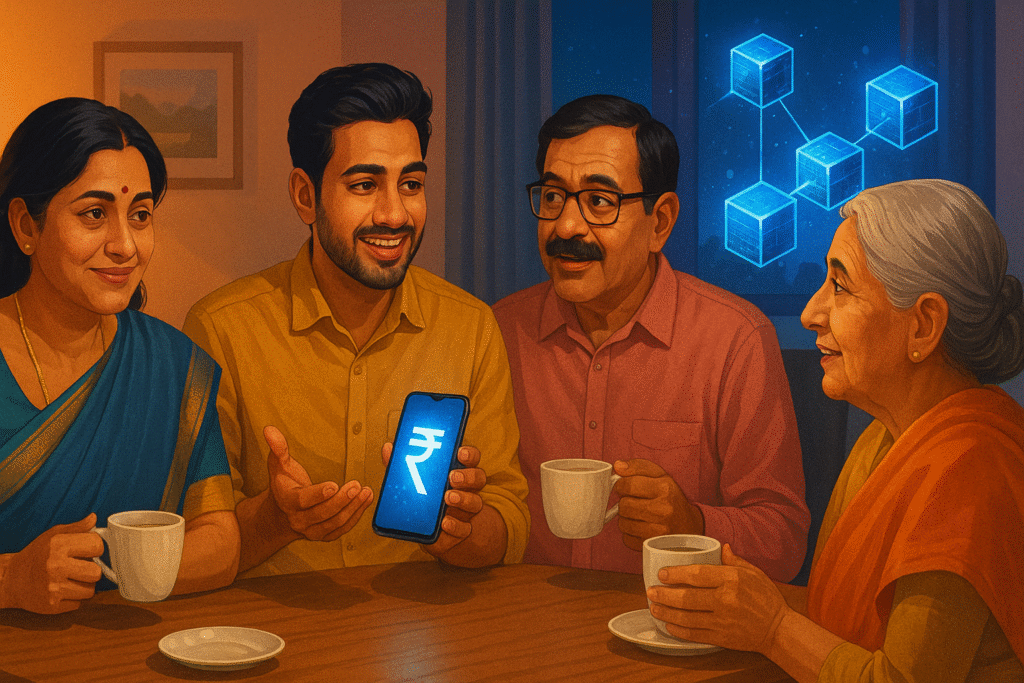
There was a moment last year when a friend from Chennai—an accountant, very serious kind—asked me, “Yaar, everyone keeps talking about blockchain… but what is blockchain really? Should Indians even care?”
He wasn’t alone.
I’ve heard the same question from college students in Pune, IT professionals in Bangalore, and even parents who use UPI daily.
Here’s the truth:
Most Indians think blockchain = crypto = risky.
But blockchain is much bigger. Much safer. Much more powerful. And it’s quietly becoming part of our daily lives—just like UPI did a few years ago.
So today, let’s break it down in the simplest way possible.
No jargon. No confusion.
Just a clean, relatable explanation of what is blockchain India, why it matters, and how it will impact your money, your career, and your future.
What Is Blockchain? Simple Explanation for Indians (2026 Guide)
⭐ A Simple Way to Understand Blockchain
Think about the notebook your teacher used in school to record attendance.
One page per day.
Everyone trusted it because it was transparent, unchangeable, and official.
Now imagine the same notebook…
but digital,
shared among thousands of people,
and impossible to tamper with.
That’s blockchain.
It’s a digital ledger—a record book—stored across thousands of computers instead of one office, one bank, or one server.
The magic?
No single person owns it.
No one can cheat it.
Everyone can verify it.
⭐ How Blockchain Works
Let’s break this down in the most Indian way.
Step 1 — A Transaction Happens
Example: You send 1 token to your friend using a crypto wallet like CoinDCX or ZebPay.
Step 2 — The Transaction Is Added to a “Block”
A block = a group of transactions, like “today’s page” in the notebook.
Step 3 — The Block Gets Locked
Once full, the block gets:
- Timestamp
- Digital signature
- Unique code (hash)
This makes it impossible to alter.
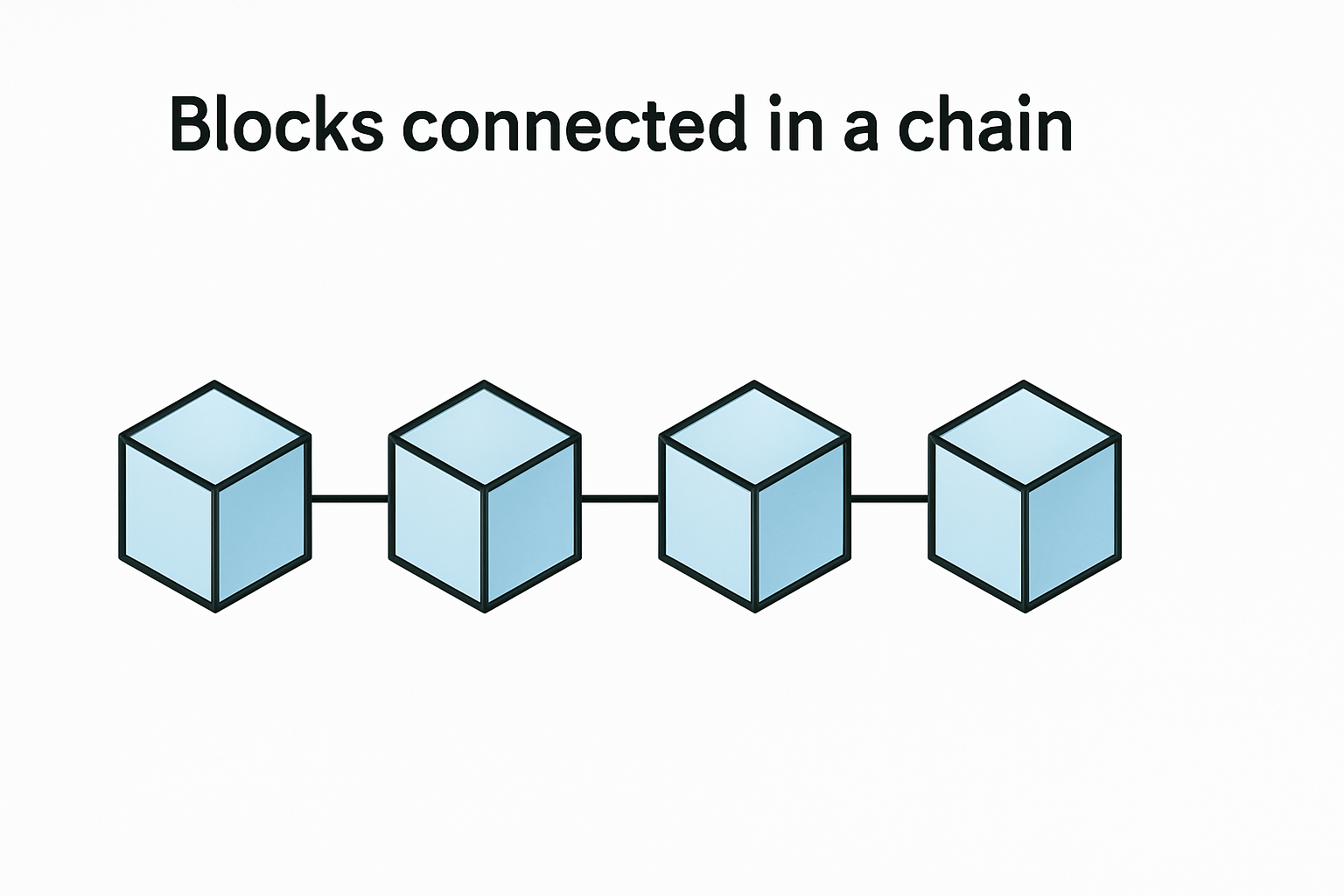
Step 4 — The Block Is Added to the “Chain”
Hence the word block-chain.
Each block is linked to previous ones.
Changing one block would require changing the entire chain across thousands of computers.
Almost impossible.
⭐ Why Indians Should Care About Blockchain
Most Indians search for “what is blockchain India” because they want to understand how this technology can reduce corruption, fraud, and middlemen.
India isn’t “catching up”.
India is leading.
Here’s where blockchain is already being used:
1. Digital Certificates & Degrees
- IIT Kanpur
- Delhi University
Both issue blockchain-based certificates to stop forgery.
2. Land Records
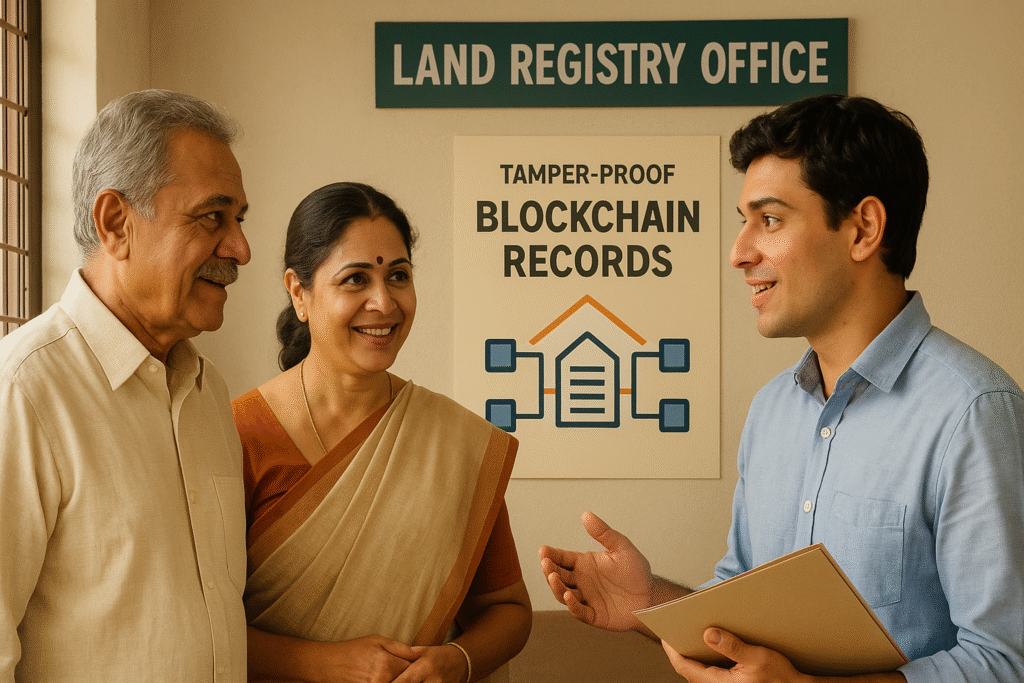
States like Andhra Pradesh and Maharashtra are using blockchain to reduce property fraud.
3. Logistics & Supply Chains
From milk delivery to pharma shipments — blockchain keeps track of every step.
4. Banking & Finance
Banks like HDFC, ICICI, and SBI are testing blockchain for:
- KYC
- Fraud detection
- Loan approvals
- International payments
5. Web3 Jobs
Companies like Polygon (founded in India!) hire blockchain developers and analysts across the country.
⭐ The Big Question — Is Blockchain Safe?
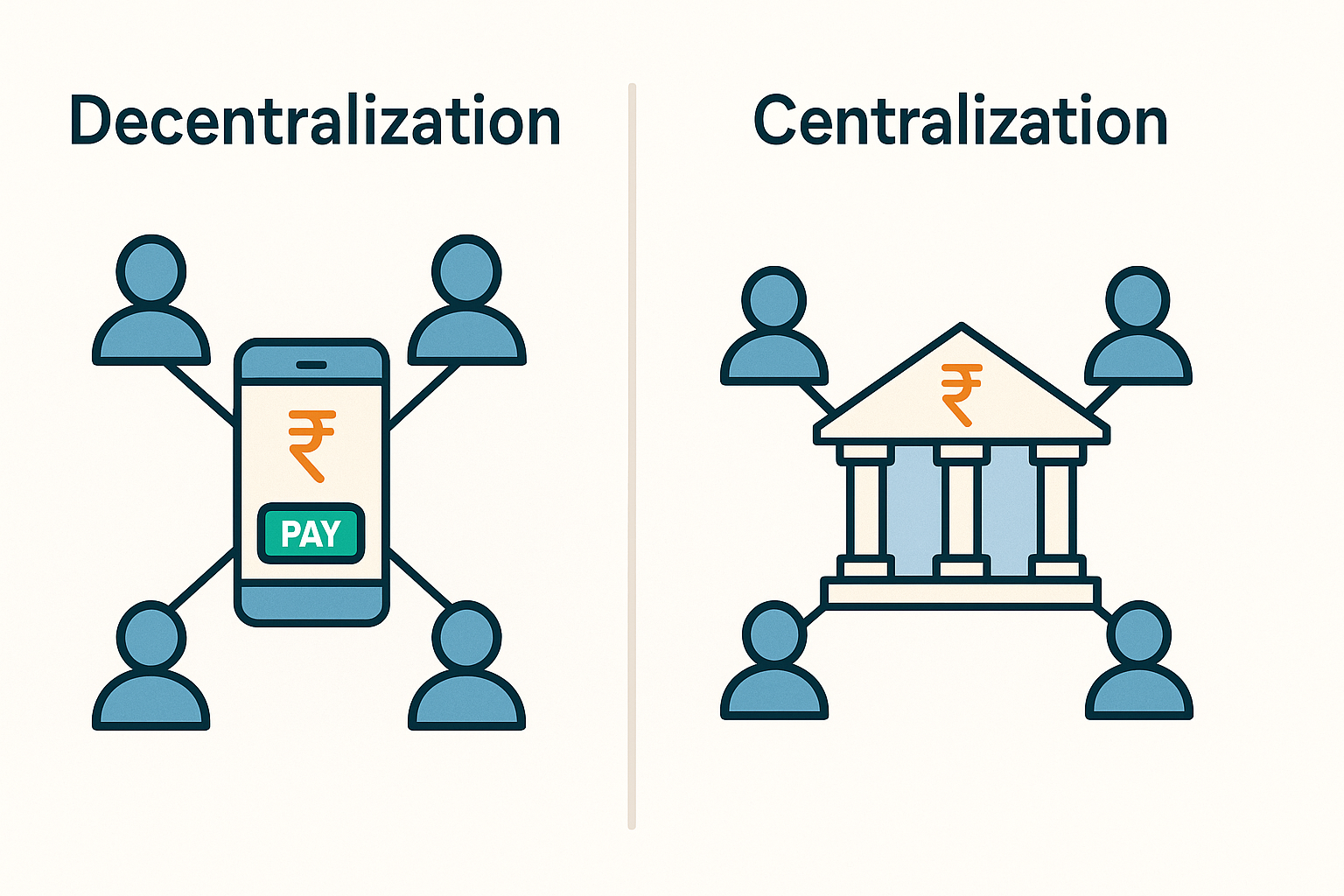
Yes.
Blockchain is built on three powerful pillars:
- Decentralization → no single point of failure
- Transparency → anyone can verify data
- Security → extremely hard to hack
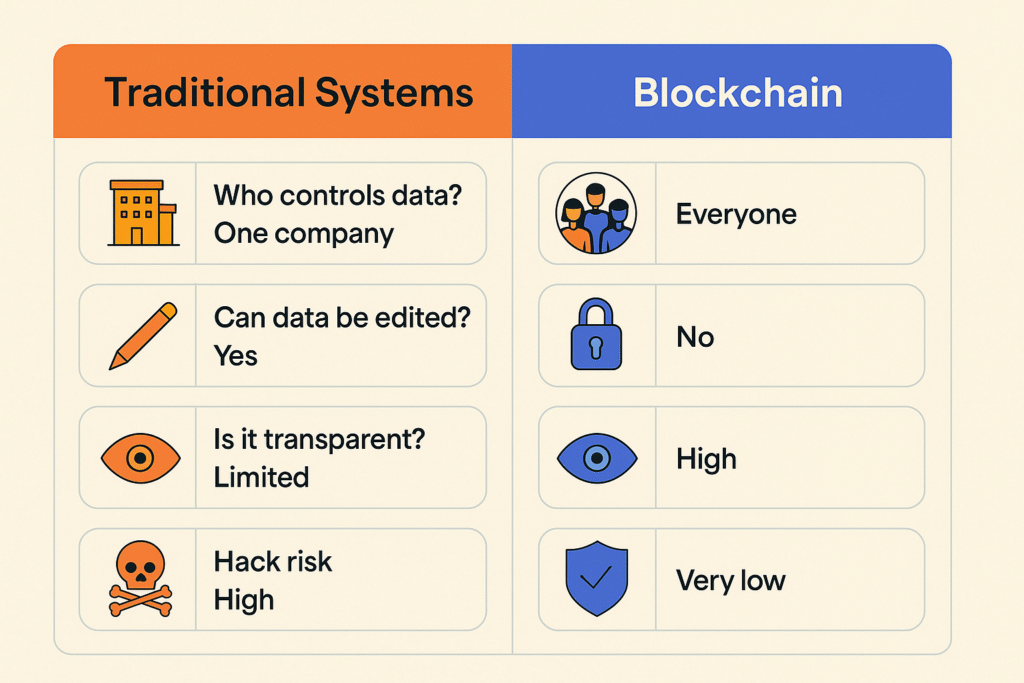
Here’s a simple comparison:
| Feature | Traditional Systems | Blockchain |
| Who controls data? | One company | Everyone |
| Can data be edited? | Yes | No |
| Is it transparent? | Limited | High |
| Hack risk | High | Very low |
| Cost | Often high | Often low |
⭐ Indian Examples: How Blockchain Will Improve Your Daily Life
1. Faster Banking
Imagine NEFT or IMPS that settles instantly even on bank holidays.
Blockchain can make it happen.
2. Safer Online Shopping
Fake products become nearly impossible.
Brands like Tata, Reliance, and ITC are testing blockchain-based tracking.
3. Cheaper International Payments
Instead of paying ₹600 for a foreign remittance fee, blockchain-based payments can cost under ₹10.
4. Cleaner Government Systems
Subsidies, Aadhaar-linked payments, and public expenditure can become transparent.
⭐ Difference Between Blockchain & Crypto (Important for Indians)
Many people confuse blockchain with crypto.
They are NOT the same.
| Topic | Blockchain | Crypto |
| Meaning | Technology | Asset built on blockchain |
| Example | Internet | YouTube, Gmail |
| Risk | Low | Depends on the coin |
| Legal Status in India | Allowed | Taxed but not illegal |
| Ownership | Anyone can use | Buyers, traders |
Cryptocurrency is only one use case of blockchain.
Just like email is one use of the internet.
⭐ Types of Blockchains
1. Public Blockchain
Anyone can join.
Highly secure.
Examples: Bitcoin, Ethereum, Solana.
2. Private Blockchain
Companies use these for internal processes.
Examples: Banks, logistics companies.
3. Hybrid / Consortium
Used by groups of companies or government bodies.
Example: Trade finance, healthcare.
⭐ Will Blockchain Create Jobs in India?
Absolutely.
Here are the roles:
- Blockchain Developer
- Solidity Programmer
- Web3 Research Analyst
- Crypto Marketing Manager
- Smart Contract Auditor
- Blockchain Project Manager
Starting salaries range from ₹6–18 lakhs, even for freshers with skills.
India is one of the largest Web3 talent pools globally.
What Is Blockchain India?
⭐ Blockchain Applications
Banking & Finance
Used by HDFC, ICICI, Axis Bank.
Education
Delhi University certificate verification.
Healthcare
Medical records stored securely.
Government
Property, identity, and public welfare audits.
Stock Markets
Future potential: transparent trading & settlement.
What Is Blockchain India: A Simple Summary for Absolute Beginners
Here’s the simplest answer:
Blockchain is a secure digital ledger where data is recorded in blocks and linked together forever. Indians will soon use it in banking, land records, certificates, and even everyday payments—without even realizing it.
⭐ Advantages & Disadvantages
Benefits
- Extremely secure
- No single point of failure
- Transparent
- Lower transaction cost
- Fast processing
- Great for Indian governance
Limitations
- Complex for beginners
- Requires strong computers
- Not all governments accept every use case
- Energy usage (mostly older blockchains)
⭐ Step-by-Step Guide for Indians: How to Start Using Blockchain
Before you start using any crypto or Web3 app, it’s important to know what is blockchain India and how it works behind every digital transaction.
STEP 1: Create a Crypto Wallet
Use apps like:
✔ ZebPay
✔ CoinDCX
✔ Binance
STEP 2: Buy a Small Amount (₹100–₹500)
Just to experience real blockchain transactions.
STEP 3: Try a Real Transaction
Send ₹100 worth of crypto from one wallet to another.
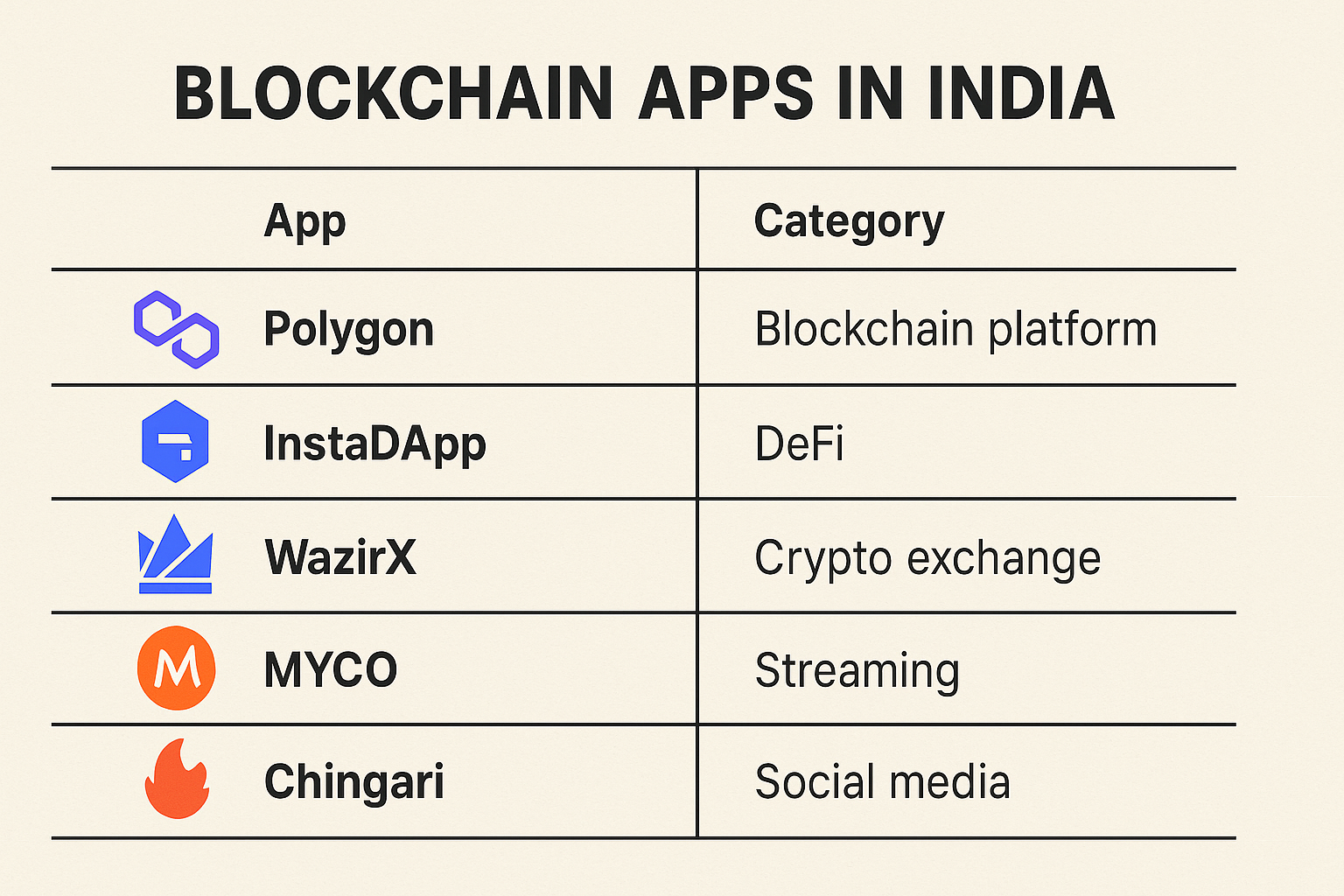
STEP 4: Explore Blockchain Apps
• Polygon
• Solana
• Arbitrum
• Ethereum
STEP 5: Learn Basics Slowly
Start with:
• What is a wallet
• What is a node
• What is a smart contract
⭐ Mistakes Indians Must Avoid (Pro Tips Included)
❌ Mistake 1: Thinking Blockchain = Crypto
Blockchain is MUCH bigger.
❌ Mistake 2: Expecting Quick Profits
Short-term greed → losses.
❌ Mistake 3: Using Unknown Apps
Stick to trusted platforms.
❌ Mistake 4: Ignoring Security
Use:
• 2FA
• Strong passwords
⭐ Real-Life Indian Stories
⭐ Story 1: The Land Scam Rescue
Ramesh from Pune almost lost ₹18 lakh because the seller forged land papers.
Blockchain-based land registry saved him — the real owner was exposed instantly.
⭐ Story 2: A Student Wins with Blockchain
A B.Tech student created a blockchain certificate system.
15 colleges adopted it.
He now earns ₹1.2 lakh/month.
⭐ Story 3: A Small Business Goes Big
A Gujarati textile shop started using blockchain to track fabrics.
No more cheating suppliers.
Customers trust them more.
⭐ Tools, Apps & Resources
| App / Tool | Best For | Why It Helps |
| CoinDCX | Beginners | Simple UI + secure |
| ZebPay | Low fee trading | Easy for Indians |
| Binance | Advanced users | High liquidity |
| Polygon | Web3 apps | India’s fastest chain |
| Groww Crypto (when active) | Trusted brand | Easy onboarding |
Soft Recommendation:
These tools helped me understand blockchain without confusion.
If you start with ₹100–₹500, you’ll learn safely and confidently.
Once you understand what is blockchain India, you’ll realise how big its impact will be on banking, land records, payments, and everyday life.
⭐ Final Thoughts
If there’s one thing I’ve learned after years of exploring blockchain, it’s this:
Technology becomes simple the moment someone explains it to you like a friend.
You don’t need jargon.
You don’t need a finance degree.
You simply need curiosity — and a starting point.
Blockchain will shape India’s future the way UPI changed payments.
The earlier you understand it, the more confident you’ll be in the new digital world.
Start small.
Experiment safely.
Stay curious.
You’re already ahead of 90% of the country.
🔗 Internal & External Linking Suggestions
Internal Links
- Beginner’s Guide to Crypto India
- What Is Web3? Explained for Indians
- Best Crypto Apps in India
- How Blockchain Works (Technical Guide)
External Links
- RBI’s blockchain research
- NASSCOM Web3 Report
- IBM Blockchain Explained
- World Economic Forum Blockchain Guide
FAQs
Is blockchain legal in India?
Yes. Blockchain technology is fully legal. Crypto transactions are taxed but not banned.
Do I need to know coding to understand blockchain?
Not at all. You can understand the concepts without coding.
Can blockchain be hacked?
It’s extremely difficult because data is stored across thousands of computers.
Is blockchain only used for crypto?
No. Crypto is just one application. Banking, supply chain, education, and government use blockchain too.
Will blockchain affect normal Indian users?
Yes, but subtly. Just like UPI transformed payments, blockchain will improve transparency and security behind the scenes.
What is the best way to start learning blockchain?
Start with free online platforms like CoinDCX Learn, YouTube explainers, or Coursera intro courses
Can blockchain help fight corruption in India?
Yes. Blockchain’s transparency can reduce fraud, document tampering, and misuse of funds.
Leave a Reply